 Why trust VPN Guider
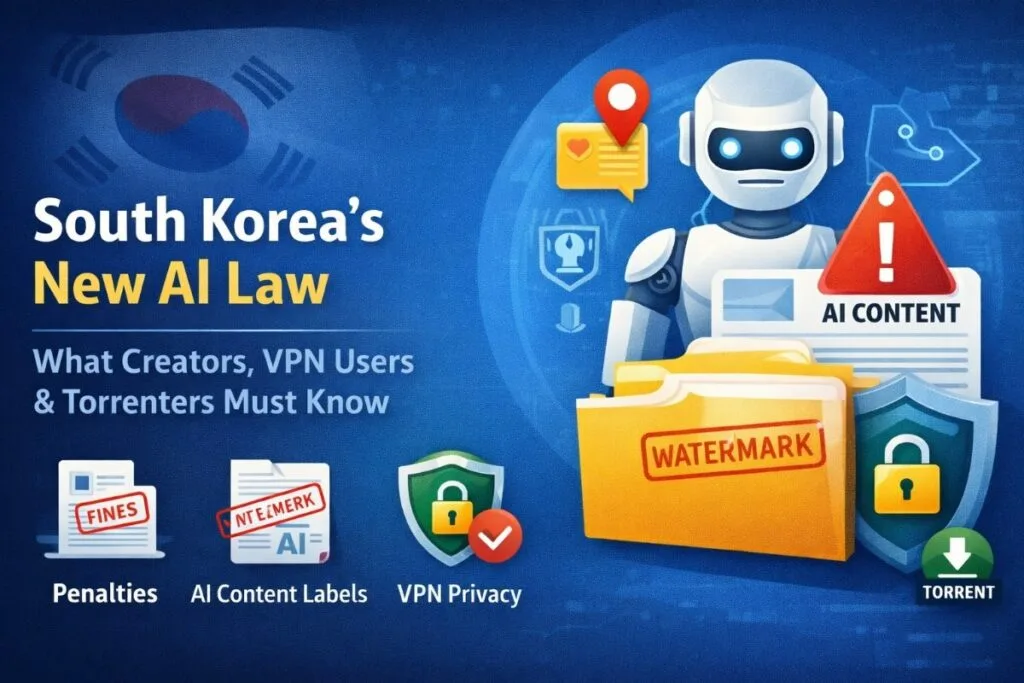
South Korea has rolled out a landmark AI law that changes how AI-generated content is labeled, who’s accountable, and what penalties apply. For creators, platform operators, and privacy-minded internet users—especially those who rely on VPNs or use torrenting services—understanding the new rules is essential to stay compliant and protect personal data.
What the law does and who it targets
The Framework Act on the Development of Artificial Intelligence and the Establishment of Trust establishes transparency rules for AI outputs, requirements for so-called high-impact systems, and penalties for noncompliance. Importantly, enforcement focuses on service providers and operators rather than individual end users—so everyday people who use AI tools are not the primary targets of fines. The law took effect in late January 2026, but regulators built in a one-year grace period to give companies time to adapt.
Key compliance rules
Providers must clearly disclose when content is generated by AI. That can mean visible watermarks, logos, download-time notices, audio disclosures, or metadata flags—depending on whether content is consumed inside a platform or distributed externally. Deepfakes and other manipulated media carry stricter labeling rules, such as continuous video watermarks or upfront audio alerts. Foreign companies that meet specified revenue or user thresholds must also appoint a Korea-based representative to liaise with regulators.
High-impact AI and enforcement
The law identifies “high-impact AI” systems as those likely to affect life, safety, or fundamental rights—spanning areas like healthcare, energy, transportation, criminal investigations, hiring,g and finance. Operators of such systems face additional obligations: risk-management plans, human oversight, documentation of training data and model parameters, and other transparency measures. Regulators can carry out investigations and, after the grace period, impose administrative fines in serious cases.
Penalties and practical implications
Businesses that fail to meet disclosure rules, refuse investigations, or neglect domestic-representative duties could face administrative fines (up to 30 million won under the current framework). Enforcement aims to be proportionate, with authorities signaling they will prioritize cases that cause major social harm. Still, companies should move quickly to align product disclosures, metadata practices, and user notices to avoid future liability.
What this means for VPN and torrent users
Although the law targets providers, privacy-conscious users and those who engage in peer-to-peer file sharing should pay attention. A reputable VPN remains a vital privacy layer: it encrypts traffic on untrusted networks, hides your IP from peers while torrenting, and helps prevent ISP throttling or basic tracking. VPNs do not alter content-labeling obligations or remove watermarks from downloaded AI files—but they do help secure your connection and protect personal privacy when accessing or sharing digital content. Include two-factor authentication, keep software updated, and prefer verified sources for downloads to reduce exposure to manipulated or malicious files.
Conclusion
South Korea’s AI law raises the bar for transparency and accountability in AI services, while shielding ordinary users from direct fines. Platform operators and foreign service providers will need to adapt labeling, reporting, and governance practices—while individual users should double down on standard privacy hygiene, using tools like VPNs and responsible torrenting practices to stay safe online.