 Why trust VPN Guider
Today — January 28, 2026 — marks Data Privacy Day, a reminder that protecting your personal information online isn’t optional anymore. With billions affected by censorship and pervasive tracking, small, consistent changes can dramatically reduce how much companies and bad actors know about you. Below are four focused actions you can take right now to strengthen privacy while still enjoying streaming, torrenting, and general internet use.
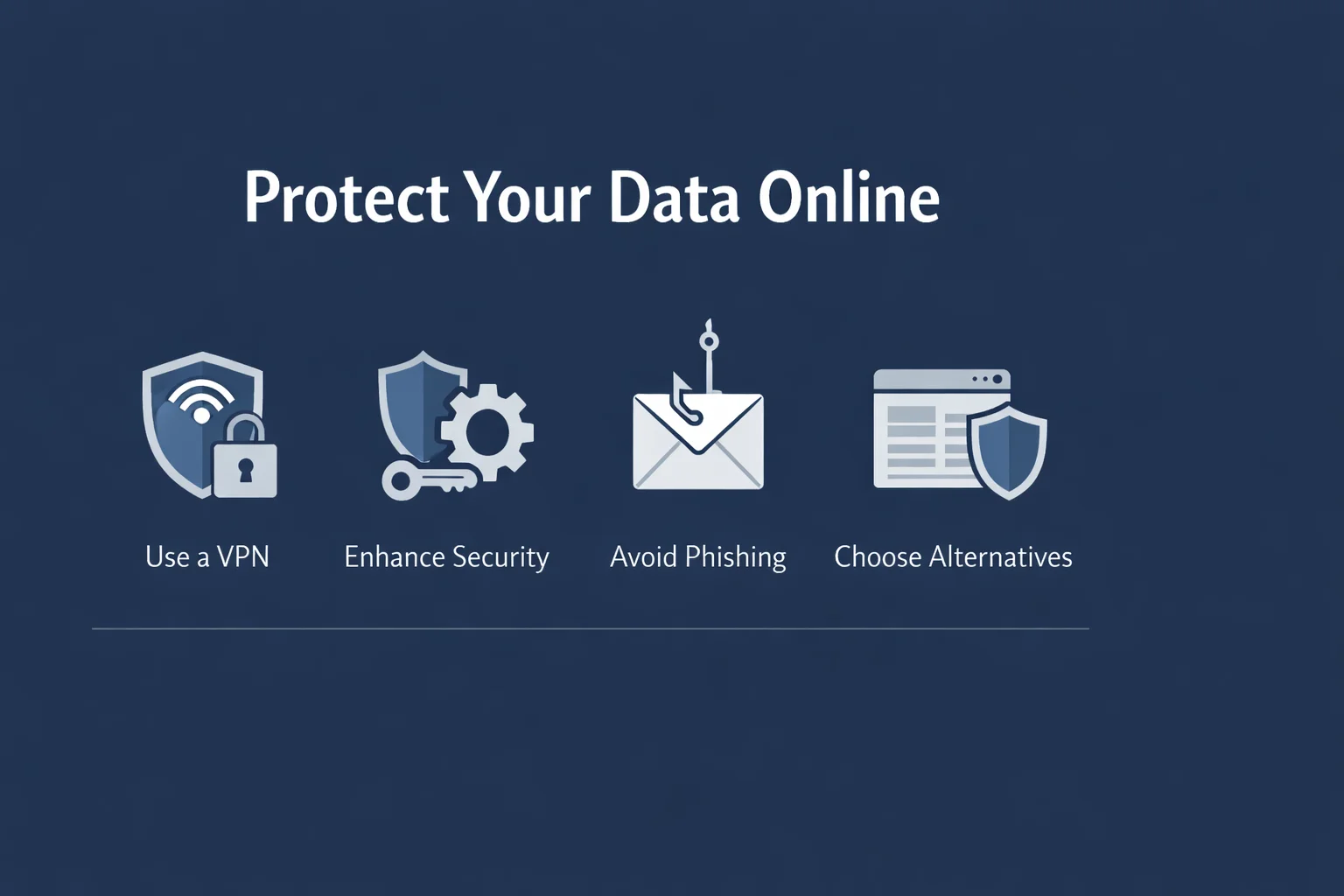
1. Use a VPN to encrypt your traffic and bypass blocks
A virtual private network (VPN) creates an encrypted tunnel between your device and the internet, hiding your browsing and download activity from ISPs, public Wi-Fi snoops, and snooping parties. That encryption makes VPNs especially useful for protecting torrent traffic and accessing geo-restricted streaming libraries safely. Look for providers that offer a strict no-logs policy, a reliable kill switch, fast servers for streaming/P2P, and dedicated P2P locations — features that reduce leak risk and improve speeds while torrenting. Remember: a VPN increases privacy but doesn’t make you anonymous; combine it with good account hygiene for best results.
Quick tip for torrenters
Choose VPNs that explicitly allow P2P on select servers and offer SOCKS5 or port-forwarding options to improve torrent client performance without exposing your real IP address. This reduces copyright exposure risk while maintaining download efficiency.
2. Add extra security tools — don’t rely on a single solution
Privacy works best in layers. Use a password manager to generate and store unique credentials, enable two-factor authentication on critical accounts, and consider secure cloud storage for sensitive files. Many modern VPNs bundle extras like ad and tracker blockers, malware scanning, or password managers — useful if you prefer an integrated suite. However, standalone antivirus and dedicated password managers still often provide deeper protection; weigh convenience versus capability when choosing bundles.
3. Be aware of the real risks and act accordingly
Threats come from both attackers and data-harvesting companies. Phishing remains a top vector — validate links before you click, never share passwords, and enable 2FA everywhere possible. Read privacy settings and cookie prompts instead of reflexively accepting them. Data brokers aggregate and sell profile data; services exist that will request removal on your behalf, helping to cut down targeted ads and spam. Simple habits — careful clicking, privacy-first browser choices, and regularly auditing account permissions — compound into meaningful protection.
4. Reduce reliance on big tech where practical
Major platforms collect a wide array of behavioral data because their business models often rely on advertising and profiling. Where feasible, consider privacy-focused alternatives: encrypted email and storage, privacy-first browsers, and smaller app ecosystems that don’t monetize your activity. Transitioning entirely may be unrealistic for many, but replacing a few services (email, cloud storage, or browser) with privacy-centric options can limit data exposure significantly.
Data privacy is not a one-time task but an ongoing posture. For people who torrent or stream regularly, combining a reputable VPN with careful account practices, layered security tools, and selective use of privacy-focused services offers a practical, achievable privacy baseline. If your business is building VPN + torrenting tools, emphasize transparent logging policies, P2P-optimized infrastructure, and educational resources — these practical features build trust and keep users safer in everyday online activities.