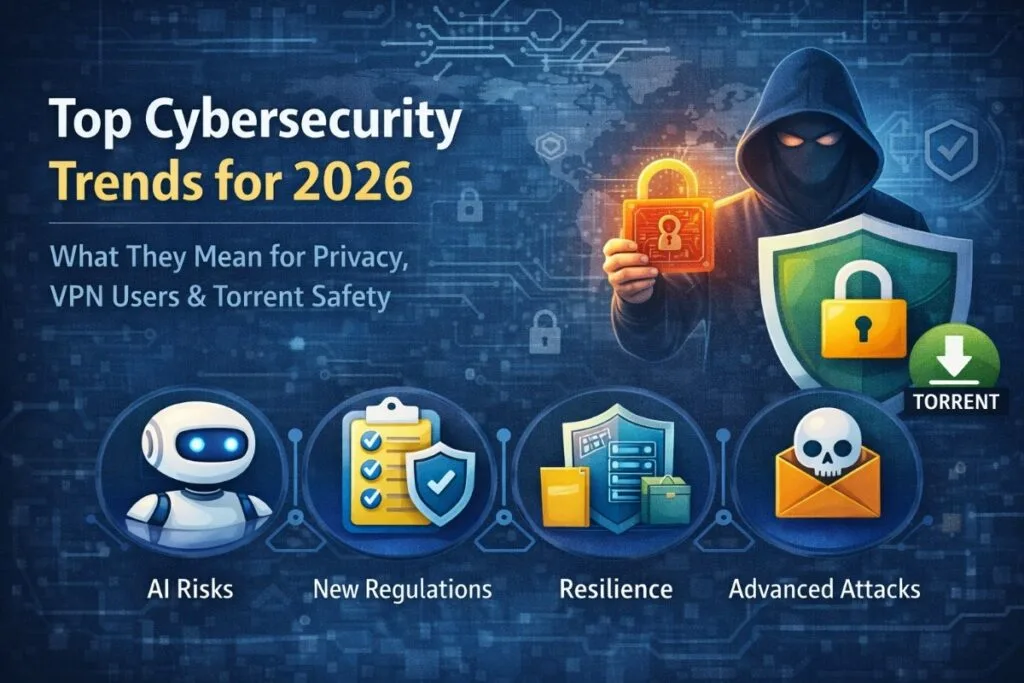
Cybersecurity in 2026 is no longer just an IT concern—it’s a core business, privacy, and personal safety issue. As organizations accelerate digital transformation and individuals spend more time online, cyber threats are becoming more sophisticated, persistent, and financially damaging. According to recent industry analysis, several key cybersecurity trends will shape how companies and everyday users protect their data in the year ahead. Understanding these shifts is especially important for privacy-focused users, VPN users, and those who rely on torrenting and peer-to-peer networks.
AI Governance Takes Center Stage in Cybersecurity
Artificial intelligence is now deeply embedded in business operations, from automation to customer support. However, the rapid adoption of AI has outpaced security controls. In 2026, AI governance is emerging as a top cybersecurity priority, with organizations focusing on guardrails, transparency, and risk management.
For users, this matters because poorly governed AI systems can leak data, misclassify threats, or be manipulated by attackers. As AI-generated content increases, verifying sources and protecting personal data becomes more critical—especially when downloading files or streaming content from unfamiliar platforms.
Regulatory Pressure Reshapes Security and Privacy Standards
Governments worldwide are tightening cybersecurity and data protection regulations. New disclosure rules, breach-reporting requirements, and accountability standards are forcing companies to rethink how they collect, store, and protect user data.
For privacy-conscious users, this shift highlights the importance of taking control of personal security. Tools like VPNs help encrypt internet traffic, reduce exposure to ISP tracking, and add a protective layer when accessing services across borders or on public Wi-Fi networks.
Operational Resilience Becomes a Core Defense Strategy
Instead of assuming breaches can be fully prevented, organizations are now prioritizing resilience—how quickly systems can recover after an attack. Ransomware, supply-chain attacks, and service outages have shown that downtime can be just as damaging as data loss.
This trend reinforces best practices for individuals as well: backing up data, using secure networks, and avoiding risky downloads. For torrent users, resilience means choosing safe torrenting practices, verifying files, and using a VPN to reduce exposure to malicious peers.
Cyber Insurance and Financial Risk Get Stricter
Cyber insurance providers are tightening requirements due to rising claims. Companies must now demonstrate strong security hygiene, incident response plans, and ongoing risk assessments to qualify for coverage.
This financial pressure trickles down to users, as platforms become stricter about security policies. End users benefit by adopting similar habits—strong passwords, two-factor authentication, and encrypted connections—especially when engaging in high-risk activities like torrenting or accessing geo-restricted content.
Evolving Attack Techniques Target Everyday Users
Cybercriminals are shifting tactics, using AI-powered phishing, deepfakes, and highly evasive attacks that bypass traditional defenses. These threats often target browsers, email, and unsecured networks rather than corporate servers alone.
Using a VPN doesn’t stop phishing, but it does protect your connection from interception and reduces tracking while browsing, streaming, or downloading torrents. Combined with cautious online behavior, VPNs play a critical role in modern digital safety.
What This Means for Safe Internet Usage in 2026
Cybersecurity trends in 2026 point to one clear reality: security is now shared between organizations and users. While companies invest in AI controls, resilience, and compliance, individuals must take responsibility for their own privacy and online safety.
Using a reliable VPN, following safe torrenting practices, avoiding suspicious links, and staying informed about evolving threats are no longer optional—they’re essential. As cyber risks grow more complex, proactive digital hygiene is the strongest defense for anyone navigating today’s internet.