 Why trust VPN Guider
Artificial intelligence tools are evolving at a breathtaking pace. From AI-generated portraits and voice cloning apps to smart assistants that summarize emails and automate tasks, new platforms promise convenience, creativity, and viral appeal. But before uploading your photos, voice samples, or personal information to the latest AI trend, it’s crucial to pause and consider one thing: your privacy and digital footprint.
As AI systems become more advanced, they don’t just process your data — they often store, analyze, and learn from it. That creates long-term implications for your online security, digital likeness, and even identity protection.
Your Likeness Is Data — And Data Is Valuable
When you upload a selfie to create an AI avatar or share your voice to generate synthetic audio, you’re providing biometric data. Facial structure, voice tone, expressions, and behavioral patterns are deeply personal identifiers. Unlike passwords, you can’t reset your face or your voice.
Many AI platforms rely on large-scale data collection to improve their models. While some companies claim anonymization, users rarely understand how long their data is stored, whether it’s shared with third parties, or if it could be used to train future systems.
This raises significant concerns around:
- Biometric data misuse
- Deepfake generation
- Identity theft
- Data resale to third-party advertisers
In a world where online privacy is already fragile, adding sensitive personal data into AI ecosystems increases exposure.
The Hidden Risk of AI Data Retention
One of the biggest issues with emerging AI tools is data retention. Some platforms store user inputs to refine algorithms, improve personalization, or build user profiles. Over time, this creates a detailed behavioral map of your preferences, interests, and digital habits.
For privacy-conscious users — especially those engaged in torrenting, streaming access across regions, or managing sensitive online activities — persistent data storage can increase risk. AI platforms may log IP addresses, device identifiers, and interaction histories.
Without proper safeguards, this information can be vulnerable to:
- Cybersecurity breaches
- Unauthorized surveillance
- ISP tracking
- Government data requests
The more centralized your data becomes, the more attractive it is as a target.
How VPNs Strengthen Your AI Privacy
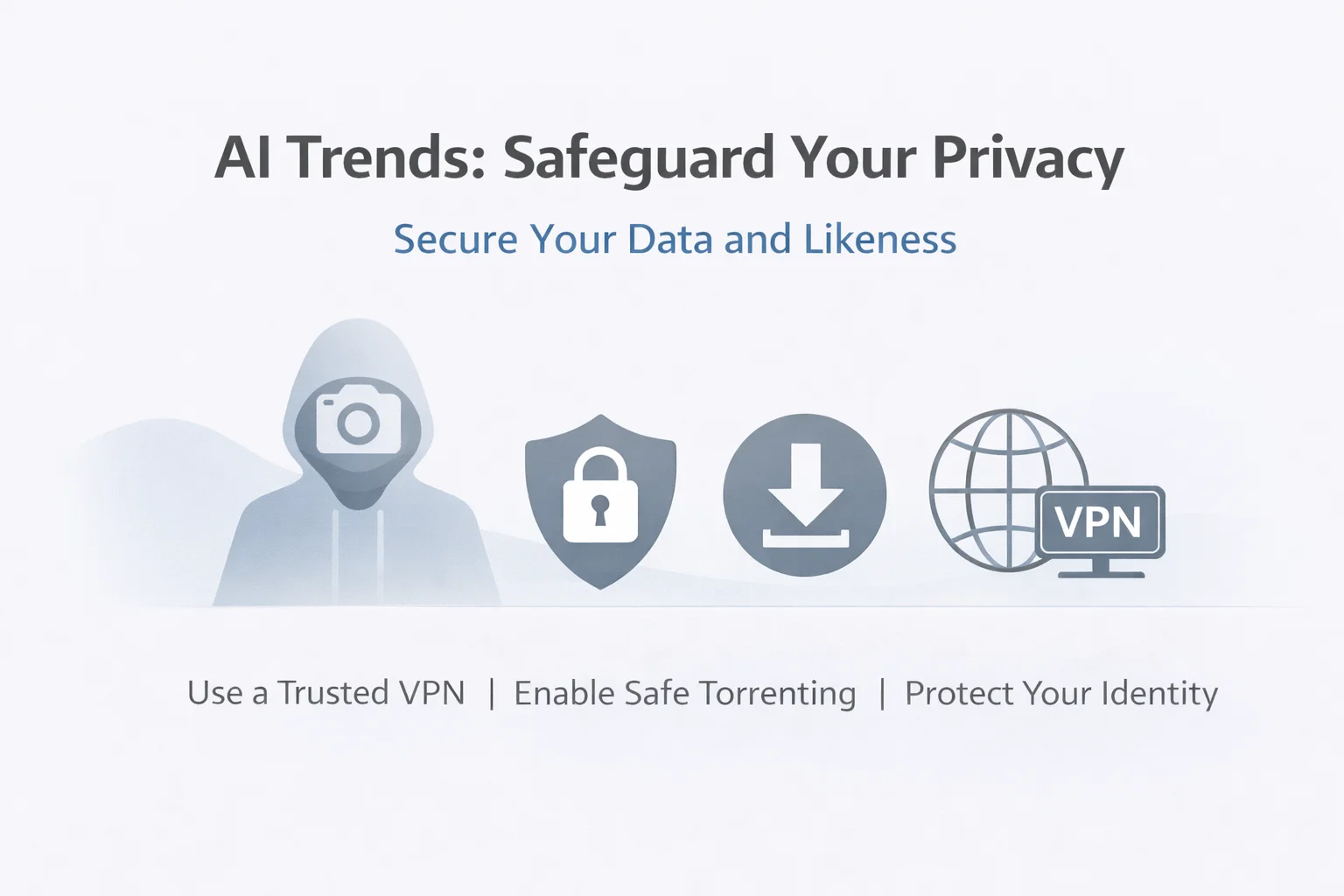
While AI privacy concerns are evolving, there are practical steps users can take today. A reputable VPN (Virtual Private Network) adds a critical layer of protection by encrypting your internet traffic and masking your IP address.
When interacting with AI platforms, a VPN helps:
- Prevent ISP monitoring and bandwidth throttling
- Reduce IP-based tracking
- Protect your connection on public Wi-Fi
- Maintain anonymity while browsing or testing AI tools
For users who frequently download large files, access global content, or use torrent clients, combining a no-logs VPN with secure browsing practices significantly reduces exposure. Encryption ensures that your activity remains private and shielded from third-party monitoring.
Smart Habits Before Using AI Platforms
Beyond using a VPN, responsible digital behavior matters. Before joining any AI trend:
- Read the privacy policy carefully.
- Check data retention and deletion policies.
- Avoid uploading sensitive documents or identifiable biometric data.
- Disable unnecessary permissions.
- Use multi-factor authentication on connected accounts.
If a platform does not clearly explain how your data is stored or deleted, reconsider participation.
AI Innovation Shouldn’t Cost You Your Privacy
AI technology offers incredible benefits — creativity, automation, accessibility, and efficiency. However, innovation must be balanced with cybersecurity awareness and digital safety practices.
Your data, likeness, and online identity are long-term assets. Once shared, control becomes limited. For individuals and businesses operating in privacy-sensitive spaces — including VPN users, torrent communities, and online security advocates — vigilance is essential.
The next viral AI tool may be exciting, but protecting your privacy should always come first. With encrypted connections, smart data practices, and a security-first mindset, you can explore emerging AI trends without compromising your digital freedom.
In the age of intelligent machines, staying private is no longer optional — it’s strategic.