 Why trust VPN Guider
Artificial intelligence is reshaping schools and public policy across California. Recent 2025 legislation aims to make AI deployments safer and more transparent — a shift that matters not only to educators but to anyone who cares about online privacy, secure torrenting, and safe access to blocked content. Here’s what the changes mean for everyday internet users and how tools like VPNs can help keep you protected.
What lawmakers changed (short version)
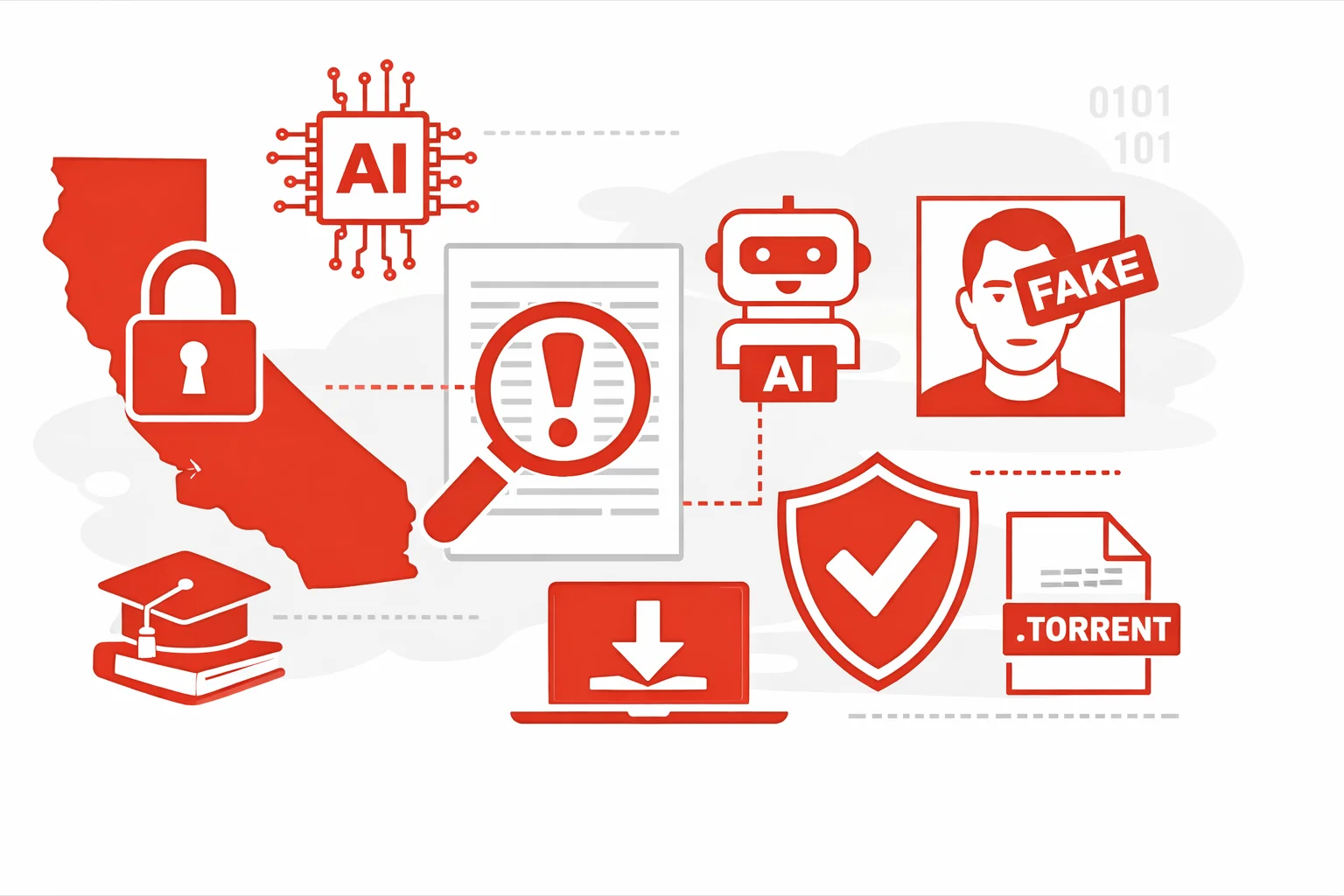
California’s 2025 session produced several notable measures: rules requiring makers of powerful AI systems to publish safety protocols and incident reports; mandates that chatbot services disclose when users are interacting with AI and add protections for minors; and new warnings around AI-generated media so consumers and courts can better identify deepfakes. Some bills were signed into law, while others were vetoed and will likely be revised. These developments reflect a push for transparency and accountability as AI becomes more embedded in education and daily life.
Why this matters for privacy and torrenting
AI regulations emphasize transparency, but they won’t by themselves stop data collection or surveillance practices that affect everyone online. Students, remote workers, and torrent users should assume that platforms could log usage, analyze behavior, or surface targeted content — unless technical protections are in place. That’s where privacy-focused practices and tools come in.
- When you torrent, your IP address can be visible to peers and trackers. A trustworthy VPN masks that IP address, reducing the risk of exposure to ISPs or bad actors.
- AI-driven content moderation and automated enforcement systems can trigger broad filters or false positives; encrypted connections and careful client configurations help prevent unintended data leaks.
- Geo-restrictions or school/work filters driven by AI policies can block access to legitimate content — VPNs can safely route traffic through regions with different access rules, while preserving privacy.
Practical, non-technical tips to stay safer online
Use a privacy-first VPN
Choose a service with a strict no-logs policy, a kill switch, and modern encryption. These features stop your ISP or a prying third party from linking your traffic to you — vital for torrent privacy and avoiding invasive AI surveillance.
Configure torrent clients correctly
Limit peer discovery to encrypted connections where possible, avoid exposing unnecessary ports, and check community reputations before downloading content. Pairing this hygiene with a VPN reduces legal and security risks.
Treat AI systems with healthy skepticism
Verify media authenticity when possible, and be cautious about sharing personal or identifying information to chatbots and companion apps — especially tools marketed toward minors.
Stay informed about policy changes
State-level rules (and potential federal shifts) will affect how platforms collect and disclose data. Civic engagement and awareness help ensure policies protect user privacy without crippling useful technology.
California’s recent legislative push shows regulators want AI to be safer and more transparent. For people who value online freedom, privacy, and safer torrenting practices, the best response is practical: adopt encryption, use reputable VPNs, harden your torrent setup, and demand transparency from services that rely on AI. Those steps won’t eliminate all risks, but they put control back in users’ hands as policy and technology continue to evolve.