 Why trust VPN Guider
VPNs are an important tool for anyone who wants to maintain their online privacy and security. However, amid ongoing internet surveillance, censorship, and cyberattacks, Double VPN protection may be necessary. This is where Multihop VPN comes in.
The Double VPN feature, also known as Multihop VPN, provides users with double online protection. If you’d like to know more about what Double VPN is, how it works, and when it is necessary to use it, please read this article.
What is Double VPN, and how does it work?
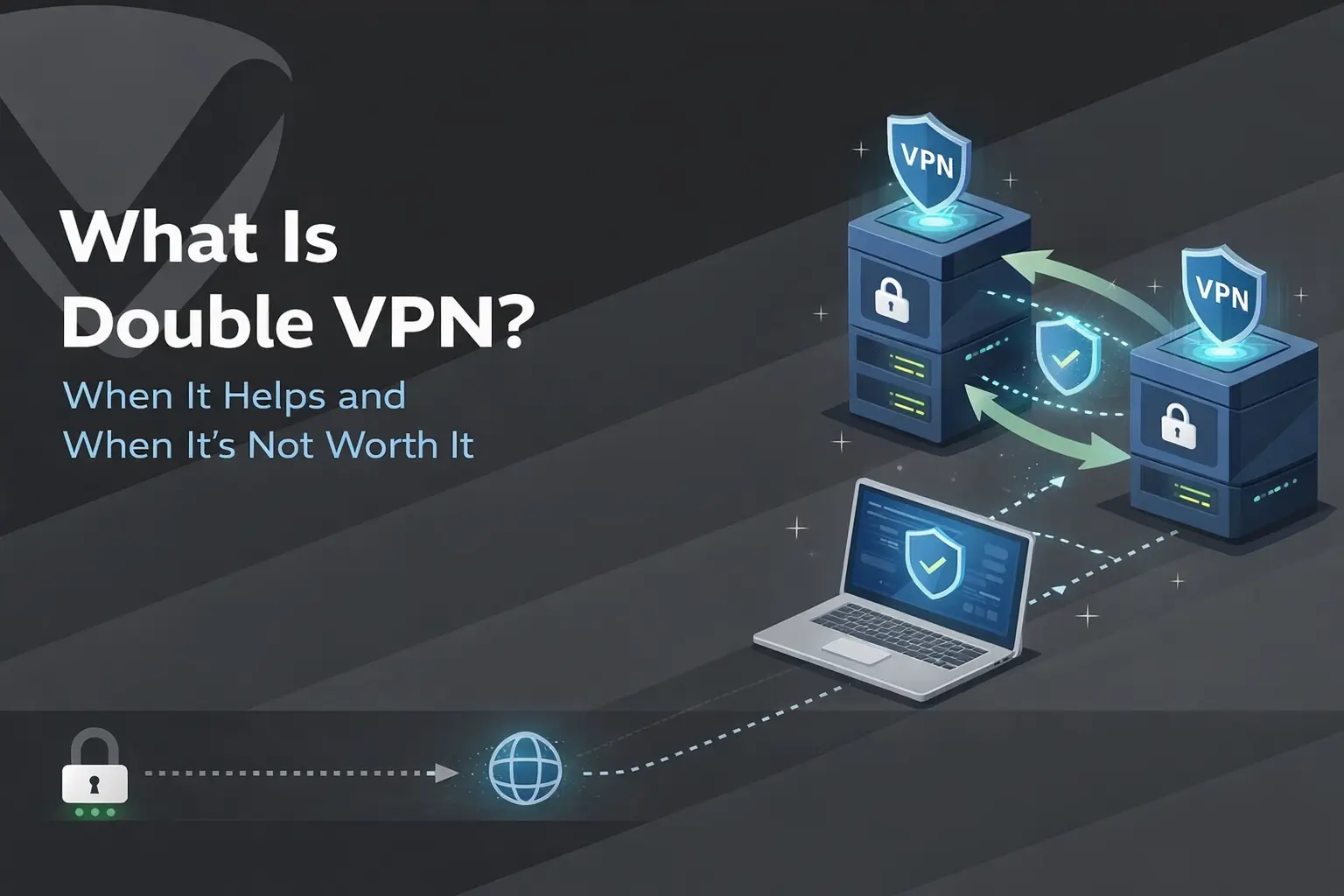
A Double VPN, also known as a multihop VPN, is an advanced security feature that routes online traffic through two VPN servers, essentially encrypting your data twice. The feature helps provide higher anonymity.
In other words, the Multihop VPN feature allows you to use two VPN servers simultaneously. This multihop connection includes Double encryption and enhanced security for your IP address. However, unlike a regular VPN, you can’t choose the servers you want to route your traffic through with Multihop VPN.
Pros and Cons of Double VPN
Although Double VPN is a useful feature that provides higher privacy and security than your average VPN, it’s still not really popular. In fact, most popular VPN providers don’t offer this feature primarily because, despite its pros, it has a daily list of pros and cons. Here they are listed below:
| Pros | Cons |
| Double encryption secures your traffic through two VPN servers. It makes data very hard to crack. | Double VPN lowers your internet speed. Two servers add extra delay. |
| A second IP layer hides the first VPN server. This setup strengthens identity protection. | 4K streaming and large downloads slow down. Performance drops noticeably. |
| Your ISP sees VPN use but cannot see the target websites. | You cannot effectively combine Tor with Double VPN. Speeds become extremely slow. |
| Multi-hop routing across different countries improves anonymity. It adds extra location masking. | Server choices remain limited. Multihop VPN only supports selected server pairs. |
| You can mix OpenVPN TCP and UDP protocols. This mix improves security and stability. |
In short, the main drawbacks of using a Multihop VPN are slow speeds and poor server selection. However, if you have a good internet connection that already provides high speeds, the speed drop becomes negligible. Similarly, while there is no server selection, you can choose popular destinations such as the US and the Netherlands.
How does Multihop VPN work?
The main idea behind a multihop VPN is to hide your IP address better and protect your data through Double encryption. In a regular VPN connection, this is not possible as the connection is pretty straightforward and provides only a single layer of encryption. Here is how it works:
- The VPN app encrypts your traffic and sends it to a VPN server.
- The server decrypts your traffic and hides your IP address
- The VPN server sends the unencrypted traffic to the designated web address.
In contrast, here is how the Double VPN setup works:
- The VPN app encrypts your traffic and sends it to the first VPN server.
- The first server encrypts the traffic again and hides your IP address
- The first server sends double-encrypted traffic to the second VPN server.
- The second server decrypts your traffic and sends it to the designated target.
As a result of this setup, your traffic gets encrypted twice. The destination web address only sees the IP address of the second VPN server, thus ensuring utmost anonymity.
Is Double VPN better than a regular VPN Connection?
A Double VPN provides stronger privacy than a regular VPN. It routes your traffic through two servers instead of one. This setup hides your IP address behind two layers of protection. It makes tracking and identification far more difficult. Double encryption also protects your data from brute-force attacks. Hackers cannot easily break two layers of encryption.
multihop VPN also splits your data path. One server sees your IP address but not your destination IP address. The second server sees your destination, but not your real IP address. This separation increases anonymity and reduces the risk of traffic correlation. Users who handle sensitive data benefit the most from this setup.
However, security depends on the VPN provider you choose. Select a VPN with a strict no-logs policy and RAM-only servers. These features prevent data storage and reduce exposure. A secure jurisdiction also strengthens privacy protections. Look for advanced features such as leak protection and a kill switch. These tools prevent accidental data exposure if the VPN connection drops.
A regular VPN is suitable for everyday browsing and streaming. A multihop VPN is suited to high-risk environments and privacy-critical tasks. The better option depends on your security needs and performance expectations.
When do you need a Double VPN?
A Double VPN becomes essential when you face high privacy risks online. Public Wi-Fi hotspots expose users to hackers and data interception. These networks lack strong encryption and attract cybercriminals. A multihop VPN encrypts your traffic twice, reducing the risk of credential theft and session hijacking. This added layer protects sensitive data such as passwords, emails, and financial details.
You may also need a Double VPN to avoid surveillance. Some governments and network operators monitor online activity. This monitoring can expose browsing habits and the websites accessed. A Double VPN masks your identity and routes traffic through multiple jurisdictions. This setup makes tracking much more difficult while protecting your digital footprint.
Journalists, activists, and researchers benefit the most from multihop VPN protection. Sensitive investigations and political work attract unwanted attention. Strong anonymity helps protect sources, communications, and unpublished material. It also allows safer access to blocked websites and restricted information. A Double VPN provides the extra security layer needed in high-risk environments where privacy and confidentiality remain critical.
When not use Double VPN?
While Double VPN boosts your average VPN’s security, there are times when using it might not be very wise. If you are connecting to the internet for average everyday browsing, it is best to avoid using Multihop VPN. In such a case, for merely hiding our IP address, all you need is a standard VPN connection.
Similarly, if you want to perform activities that require maximum speeds, such as streaming, it is best to avoid Double VPN, as it slows your connection. In addition, it is best to avoid using the multihop feature when browsing the Tor network. For Tor, your best bet is to use a standard VPN or one that provides Tor-specific features, such as Onion over VPN.
What is the difference between Double VPN and VPN Chaining?
Double VPN and VPN chaining work similarly. Both send your traffic through multiple VPN servers. This process adds extra encryption and improves anonymity. The key differences appear in setup, speed, and control.
A Double VPN uses two servers from the same provider. The app routes your traffic automatically, so setup stays simple. You get two layers of encryption with minimal speed loss. This balance makes multihop VPN practical for everyday privacy. Most users prefer it because it offers strong security without added complexity.
VPN chaining lets you connect through two or more servers, often from different providers. This setup keeps your data protected even if one provider fails. However, each extra server slows your connection. Latency rises, and download speeds drop. You may face compatibility issues between VPN apps. Multiple subscriptions also increase costs and management effort.
Security benefits decrease after two servers. Extra hops add complexity but provide little extra protection. A trusted Double VPN delivers strong security, better speed, and greater convenience. VPN chaining is suited to high-risk situations, but most users gain more value from a reliable Double VPN setup.
Key Takeaways
Double VPN boosts privacy by sending your traffic through two servers. It encrypts data twice, hides your IP, and increases anonymity. However, Multihop VPN slows down your connection, so it’s best to reserve it for activities that require high privacy and low speed.
FAQs
What is the point of a Multihop VPN?
A multihop VPN encrypts your internet traffic twice and hides your IP across two servers, providing extra privacy and stronger online anonymity.
Can I use 2 VPNs at the same time?
Yes, you can use two VPNs simultaneously, but it may slow your connection and cause compatibility issues.
Can you be tracked if you use Multihop VPN?
Multihop VPN makes tracking extremely difficult by masking your IP and splitting your data across multiple servers.
Is Double VPN better than Onion Over VPN?
Double VPN offers faster, stronger encryption, while Onion Over VPN adds extra routing through the Tor network for maximum anonymity; the choice depends on your privacy needs.
Are 2 VPNs better?
Two VPNs increase encryption and anonymity, but they reduce speed and can complicate setup, so they suit privacy-focused users more than casual browsing.